Mastering Customer Relationship Management Capabilities
Every successful business knows that growth isn't only about finding new leads. It’s about building trust with the people you already know. To do this effectively, you must master your customer relationship management capabilities. A CRM is a powerful tool that helps you turn raw data into lasting human connections.

Table of Contents
The Salesperson’s "Aha!" Moment: From Sticky Notes to Success
The Core Pillars: Customer Relationship Marketing and Sales Management
Strategy for the Seasoned Agent: Leveling Up Your CRM Analysis
In modern business, there is one phrase you will hear in every boardroom, every sales meeting, and every marketing office: Customer Relationship Management, or CRM. To someone just starting out, it might sound like a boring piece of office jargon.
You might think it is just a complicated way to track phone numbers. However, if you talk to a veteran salesperson, they will tell you something very different.
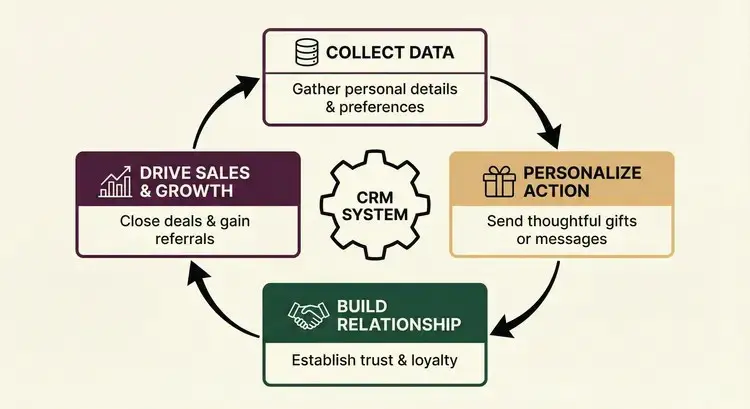
They will tell you that a CRM is the secret weapon that turns a struggling professional into a top performer. At its core, using CRM in your business involves managing and enhancing every single touchpoint you have with a human being. It is the bridge between a cold database and a warm, trusting friendship.
Let's look at why these systems matter, how they work in the real world, and what you should look for when choosing one. Most importantly, we will look at how the human connection is the most powerful part of any technology.
The Salesperson’s "Aha!" Moment: From Sticky Notes to Success
Many people start their careers just like a typical Business Development Manager who didn't quite get why everyone was obsessed with the CRM. When you first start out, a CRM feels like a digital filing cabinet.
It seems like a fine place to keep your contacts, but it feels like extra work to type in everything. You might think, "I have a good memory. I'll just keep a notebook or use sticky notes on my monitor."
But then, as the business grows, the world opens up. You realize that sales isn't just about the hot prospects and the people who are ready to buy right this second. It’s about the cold prospects and the long-term referral partners who might not buy for a year.
Once you start using customer relationship management software features the right way, things change. As the saying goes, sales start instinctively flocking like the Salmon of Capistrano. This shift from manual tracking to automated systems is what separates the people who work hard from the people who work smart.
Why Memory is a Liar
We like to think we have great memories. But imagine you meet a potential partner at a networking event. You talk about their business, their family, and their hobbies. You leave feeling great.
Then, you meet three more people. By the time you get home, the details start to blur.
Was it the lawyer who had the twin daughters, or was it the accountant? Did the real estate agent mention they were a Chicago Cubs fan, or was that the insurance guy? When you have ten contacts, you can remember everything.
When you have 1,000 or 10,000, you are lucky if you remember the person's first name. This is where the importance of using a CRM becomes clear. It acts as an "external brain." It stores the things your human brain is too busy to keep track of.
Defining Customer Relationship Management Capabilities
Before we look into the stories of success, we need to define what we mean by "capabilities." In a business sense, these are the specific things your system and your team can actually do. Enhancing customer relationship management capabilities is a comprehensive approach. The primary goal is to improve business relationships, streamline processes, and boost customer loyalty. It’s about a combination of three things:
Strategy: Your long-term plan for how you want to treat your customers.
Practices: The daily habits your team follows (like entering notes after every call).
Technologies: The actual tools (the CRM software) that manage and analyze customer interactions.
The Evolution of the CRM
Initially, CRM systems were very simple. They were basically digital versions of those old spinning card files (Rolodexes). They stored a name, a phone number, and maybe an address.
Over time, they have evolved into sophisticated platforms. Modern CRM system features now include advanced automation, deep analytics, and the ability to track every single email or social media interaction.
These platforms have become a necessity for businesses that want to stay competitive. In the old days, you could win by having the best product. Today, everyone has a good product. You win by having the best relationship.

The Core Pillars: Customer Relationship Marketing and Sales Management
To truly master your system, you have to understand the two main pillars of the CRM world: Marketing and Sales Management. These two areas work together to move a person from being a stranger to being a loyal customer.
1. Customer Relationship Marketing
This is the attraction phase. It is about staying top of mind so that when a customer is finally ready to buy, they think of you first. One of the most powerful features of customer relationship management is the drip campaign.
Think of a drip campaign like a slow-dripping faucet. Instead of dumping a gallon of water on someone once and then leaving them alone, you provide a tiny bit of value every week or every month. The CRM can automatically send helpful "how-to" articles or holiday greetings.
This keeps the relationship simmering in the background while the salesperson focuses on other tasks. It ensures that no lead ever truly goes cold because the system is always doing the nurturing for you.
2. Sales Management
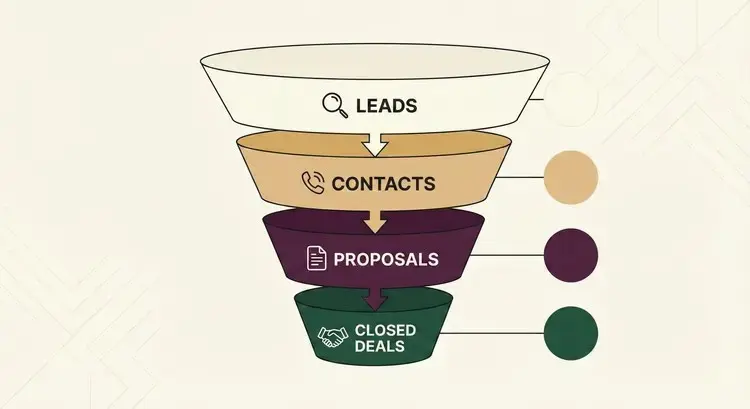
This is the action phase. Sales management features in a CRM help you track the actual process of closing a deal. It gives you tools to see the pipeline or sales funnel.
Imagine a literal pipe. On one end, you put in leads (people who might want to buy). On the other end, customers come out. In the middle, there are different stages like the initial call, the proposal, and the closing.
A CRM allows a manager to see exactly how many people are in each stage. If the proposal stage is getting stuck, the manager can step in and help. Without these features of customer relationship management, you are just guessing about why your sales are up or down.
Case Study: The Cubs Fan and the $19 Coasters
To see these Customer Relationship Management Capabilities in action, let’s look at a real story from a Business Development Manager using LeadSimple, a CRM that is specialized for residential property managers.
This salesperson met a financial advisor at a BNI meeting. A lot of people go to these meetings, hand out business cards, and then wait for the phone to ring. That is lazy sales. This salesperson did something different. He set up a one-to-one meeting to really get to know the advisor.
The Art of the Deep Note
During the meeting, the salesperson did hardly any talking. Instead, he took notes. He wrote down business details; and, he took notes on the decorations in the office, the advisor’s children’s names, and their favorite sports. One story stood out: the advisor was a die-hard Chicago Cubs fan.
In 2016, the Cubs made the World Series for the first time in over 100 years. The advisor flew to Chicago without even having a ticket!
He got scammed on the street for $500 for a fake ticket. Not wanting to miss history, he doubled down and spent another $1,000 on a second ticket that was real. He had that ticket framed on his wall.
The CRM as a Time Machine
Most people would hear that story and forget it in a week. But the salesperson put all those details into his CRM notes. He used the CRM system features to set a "Future Task" for February of the following year; one month before the MLB's Opening Day.
When the reminder popped up, he went to Etsy and found a set of coasters for $19 that displayed pivotal plays from that exact 2016 World Series. He hand-delivered them on Opening Day. The advisor realized that this salesperson wasn't just trying to get a lead. He was a person who listened. The salesperson didn't need a million-dollar budget. He just needed a CRM that made sure he didn't forget the story.
What to Look for in a CRM: A Guide for Beginners
If you are a business owner, it is important to know what to look for in a CRM so you don't waste money. Here are the essential features of a CRM:
1. Robust Contact Management
This is the heart of the system. You need a place where every email, phone call record, and "Cubs story" note is organized. Look for a centralized database where anyone on your team can see the history of a customer instantly.
2. Marketing Automation Capabilities
You want the system to do the boring work for you. A good CRM should be able to send out automated email sequences based on how a customer behaves. For example, if a customer visits your pricing page, the CRM should automatically alert a salesperson to call them.
3. Pipeline and Sales Management Tools
You need to be able to see your sales funnel. This helps you prioritize your day. Instead of wondering, "Who should I call today?", you can look at your CRM and see who has been in the proposal stage for too long.
4. Efficient Customer Support Features
A CRM is also for keeping customers happy after the sale. Look for features like ticket management to track complaints and feedback collection to ask customers, "How did we do?"
5. Reporting and Analytics
You can't fix what you don't measure. A good CRM should give you a dashboard, or a simple screen with charts that show which marketing campaigns are making money and where your best customers are coming from.
Strategy for the Seasoned Agent: Leveling Up Your CRM Analysis
If you have been in sales for 10 or 20 years, your goal isn't just using the CRM; it’s optimizing it. Seasoned agents should stop looking at the CRM as a "To-Do List" and start looking at it as a data goldmine.
1. Analyze Your Lead Source Efficiency
Where are your best customers really coming from? Run a report on all your closed deals from the last 24 months. You might find that while you spend 50% of your time on social media, 80% of your actual money comes from your referral partners. This analysis tells you to double down on what actually works.
2. Identify "Lapsed Lead" Opportunities
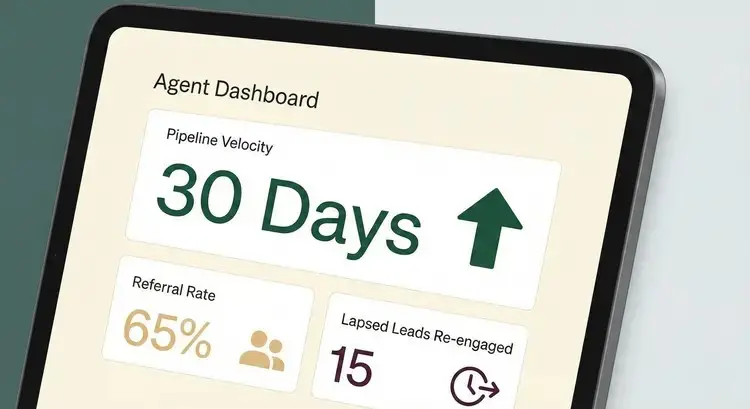
Most agents forget about people they talked to years ago who said "not right now." Use your CRM to filter for every contact that you haven't spoken to in over 18 months. Send a value-first message about an industry trend. This is one of the easiest ways to generate new leads from old data.
3. Review Your Velocity
How long does it take you to move someone from "Lead" to "Closed"? If your average is 45 days, but you have ten deals that have been sitting for 90 days, those deals are likely dead weight. Clear the clutter so you can focus on high-probability wins.
4. Advanced "Giftology" Automation
Create custom fields for "Work Anniversary" or "Favorite Drink." Every quarter, run a report for everyone with a big date coming up. When this is automated via the CRM, you become the most thoughtful person in your network without any stress.
Common Customer Relationship Management Activities
To make your CRM work, you have to exercise the system through consistent customer relationship management activities:
Data Collection and Entry: This is the cornerstone. Every time you talk to a customer, put the info in. Even the small stuff like their favorite coffee.
Customer Segmentation: Group people so your communication makes sense. Don't email your California customers about an event in New York.
Communication Management: Track all logs so if a customer calls and talks to a different employee, that employee knows exactly what happened yesterday.
Frequently Asked Questions
Strategies for Enhancing Your CRM Capabilities
Once you have a system in place, make it better by integrating it with your email, calendar, and accounting software. Build a culture of adoption by showing your team how the CRM helps them make more sales with less effort. Finally, embrace AI-powered tools that can score leads and tell you which people are most likely to buy right now.
Implementing a CRM isn't always easy. You will face resistance to change and data quality issues. However, if a $100-a-month CRM helps you close one extra deal, it has paid for itself many times over.
The "Salmon of Capistrano" Revisited
A great business should be like the salmon. It should have a system that works instinctively. When you enhance your customer relationship management capabilities, you are building a system that ensures your customers always come back to you. Don't let your contacts live on sticky notes. Give them a home in a CRM and watch your business thrive.
Ready to Turn These Insights Into Results?
You’ve seen how mastering your customer relationship management capabilities can transform a "cold lead" into a loyal partner. But reading about it is only the first step. To truly outshine the competition, you need the live strategies, expert networking, and hands-on training that only happen at the Elevate Sales Kickoff.
Don’t let your business growth stay stuck in a database. Join us to learn how the world’s top sales pros use their systems to build deeper human connections and close more deals.
Your path to a more profitable year starts right here. Complete the registration form below to secure your spot at the conference!